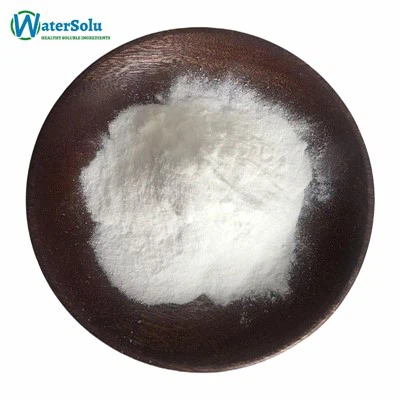


Chitosan powder has quietly become one of the most versatile natural polysaccharides in the global ingredients market. Derived from the chitin of marine crustaceans through deacetylation and purification, it is prized by formulators across the dietary supplement, functional food, cosmeceutical, and pet nutrition industries for one simple reason: it works across categories without demanding major changes to existing production lines. For B2B buyers evaluating a new raw material, the real question is rarely "what is chitosan" - it is "what is chitosan powder used for, and does it fit my formulation?" This article breaks down the five industry applications where chitosan consistently earns its place on a formulator's ingredient list.
What Makes Chitosan Powder Suitable for Multiple Industries?
Before looking at specific applications, it helps to understand why chitosan performs so well across such different product categories in the first place. Its functional versatility comes down to three overlapping properties: a high deacetylation degree that determines how reactive and bioavailable the molecule is, strong water solubility in mildly acidic conditions, and a naturally fibrous polysaccharide structure that interacts favorably with biological systems, whether ingested or applied topically. Premium-grade chitosan typically carries a chitosan content of 80% or higher and a deacetylation degree above 85%, and this single specification range is what separates a raw material that dissolves cleanly and performs consistently from one that clumps, degrades, or underperforms in finished products. In short, purity and deacetylation degree are the two numbers a buyer should check first, because everything else - solubility, stability, bioactivity - follows from them.
Major Industry Applications of Chitosan Powder
Chitosan's applications span five core industries, each drawing on a slightly different combination of its functional properties. Rather than being a niche ingredient for one product type, it behaves more like a functional toolkit that formulators reach for whenever they need fiber-like bioactivity, natural preservation, or skin-compatible hydration support.
1. Dietary Supplements & Nutraceuticals
In the supplement industry, chitosan is most commonly formulated into gut health capsules, weight management blends, and cholesterol support products. Its value here lies in compatibility - it can be layered with probiotics, dietary fiber, and vitamins without stability conflicts, which allows brands to build multi-benefit formulas rather than single-ingredient products.
2. Functional Foods & Beverages
For functional food and beverage manufacturers, chitosan serves a dual role as both a texture enhancer and a prebiotic support ingredient. It remains stable under standard pasteurization conditions, meaning it can be incorporated into fortified yogurts, probiotic drinks, and fiber-enriched beverages without requiring specialized thermal processing equipment.
3. Cosmeceuticals & Skin Care
Chitosan's relevance extends well beyond ingestible formats into cosmeceuticals, where it supports skin hydration and barrier function. It pairs readily with actives such as hyaluronic acid and collagen, making it a practical addition for brands developing moisturizing serums, facial masks, or barrier-repair creams that require multiple active ingredients to work together.
4. Food Preservation & Ingredients
As a natural preservative, chitosan offers manufacturers an alternative to synthetic preservation systems in meat, seafood, and baked goods, while also functioning as a thickening agent in sauces and dressings. This dual preservation-and-texture role, combined with its clean-label, marine-derived origin, is increasingly attractive to retail buyers pushing suppliers toward more natural ingredient lists.
5. Pet Nutrition
The pet nutrition segment has emerged as a smaller but growing application area, where chitosan supports digestive health in gut-focused pet supplements and functions as a natural preservative in pet food formulations. Its safety profile and bioavailability for animal use make it easy to integrate into pet food matrices without disrupting palatability.
Taken together, these five categories illustrate why chitosan is best understood not as a single-purpose supplement ingredient, but as a cross-category functional polysaccharide that formulators can deploy wherever fiber, preservation, or barrier support is needed.
Why Purity and Deacetylation Degree Matter for Application Performance?
Technical specification sheets can look intimidating, but for a purchasing team, only a handful of numbers actually determine whether a batch of chitosan will perform as expected. Chitosan content (ideally ≥80%) and deacetylation degree (ideally ≥85%) are the two figures that most directly affect solubility and bioactivity, since a lower deacetylation degree typically means poorer solubility and less consistent functional performance. Alongside these, moisture content, heavy metal levels, and microbiological results indicate whether the material meets food-and-supplement-grade safety standards required for FDA and EU market access. Rather than treating a certificate of analysis as a formality, buyers should read it as a quick diagnostic: if chitosan content, deacetylation degree, and heavy metal levels all sit comfortably within spec, the material is very likely to behave predictably in downstream formulation and processing.
Choosing a Reliable Chitosan Powder Supplier
Sourcing decisions ultimately come down to consistency. A supplier who can document deacetylation degree, purity, and safety testing batch after batch - and who offers customization of molecular weight or deacetylation degree for specific applications - gives formulators far more flexibility than one offering a single generic grade. For brands entering gut health, functional food, skin care, or pet nutrition categories, working with a manufacturer that understands both the technical specifications and the regulatory requirements (FDA, EU Novel Food, ISO22000, HALAL, KOSHER) significantly reduces the risk of reformulation delays down the line.
Chitosan powder has earned its place across five major industries because it solves several formulation problems at once: functional fiber support, natural preservation, and skin-compatible hydration, all from a single, marine-derived raw material. For formulators evaluating new ingredients, understanding these five applications - and the purity metrics behind them - is the first step toward building a stable, compliant, and market-ready product.
"Curious whether chitosan powder fits your next formulation? Our team is happy to walk through specifications, compatibility, and sample options - no pressure, just information."
📩 Email: info@watersolu.com
📱 WhatsApp: +86 17396654828
FAQ

Q1: What is chitosan powder used for in the supplement industry?
Q2: Can chitosan powder be used in beverages?
Q3: Is chitosan powder safe for use in cosmetics and skin care products?
Q4: How does chitosan work as a natural food preservative?
Q5: What specifications should buyers check before purchasing chitosan powder?
Q6: Is chitosan powder suitable for pet food applications?
reference
1.Recent Advances in Chitosan-Based Applications - A Review. PMC (NIH). https://pmc.ncbi.nlm.nih.gov/articles/PMC10004736/
2.Chitosan Based Materials in Cosmetic Applications: A Review. PMC (NIH). https://pmc.ncbi.nlm.nih.gov/articles/PMC9959028/
3.Applications of Chitosan for Improvement of Quality and Shelf Life of Foods: A Review. PubMed. https://pubmed.ncbi.nlm.nih.gov/17995743/
4.Chitosan and Its Derivatives: A Novel Approach to Gut Microbiota Modulation and Immune System Enhancement. ScienceDirect. https://www.sciencedirect.com/science/article/abs/pii/S0141813024094443
5.Changes in Gut Microbiota Following Supplementation with Chitosan in Adolescents with Overweight or Obesity: A Randomized, Double-Blind Clinical Trial. PMC (NIH). https://pmc.ncbi.nlm.nih.gov/articles/PMC11978168/