

The ready-to-drink (RTD) functional beverage market is one of the fastest-growing segments in the food and beverage industry. Consumers are demanding convenient, healthy, and clean-label products that deliver tangible wellness benefits. Propolis, a natural resinous substance produced by honeybees, has been recognized for centuries for its bioactive properties, including antioxidant, antimicrobial, and anti-inflammatory activities .
However, traditional propolis extracts-whether raw resin or alcohol-based tinctures-pose significant formulation challenges for beverage developers. The poor water solubility, sedimentation issues, and alcohol content have historically kept this powerful ingredient out of the RTD beverage category.
Enter water-soluble propolis powder. This innovative ingredient form is transforming how formulators approach propolis in beverages, eliminating the technical barriers that once made it nearly impossible to use. This article explores the three major technical obstacles of traditional propolis and how water-soluble powder technology systematically solves each one.
Problem 1: Sedimentation – The Wax and Resin Challenge
The Chemistry of Traditional Propolis
Raw propolis is a complex mixture with a composition that varies by geographic origin and botanical source. According to research published in the International Journal of Food Science, propolis typically consists of 50%–55% gum and resin, 25%–30% wax, 10% essential oils, 5% pollen, and 5% organic compounds .
The high wax and resin content is the primary reason traditional propolis does not dissolve in water. These hydrophobic fractions remain as particulate matter or colloids when added to aqueous systems, leading to visible sedimentation, wall adhesion, and cloudiness.
The Impact on Beverage Quality
For RTD beverage manufacturers, sediment is not just an aesthetic issue-it directly affects:
-Consumer perception: Sediment signals poor quality and spoilage
-Shelf stability: Precipitates can continue forming over time, reducing shelf life
-Labeling requirements: Some markets require sediment warnings or "shake well" instructions
-Production efficiency: Equipment fouling increases cleaning costs and downtime
How Water-Soluble Propolis Powder Solves It?
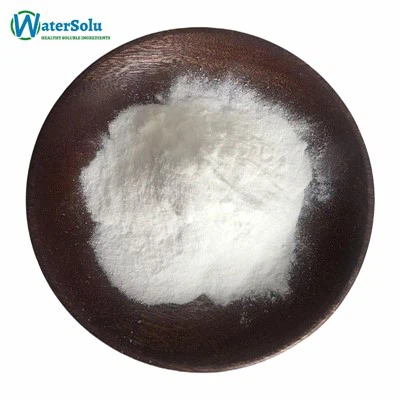
Water-soluble propolis powder is manufactured through a multi-stage process that removes insoluble wax and resin fractions:
1.Low-temperature extraction: Preserves bioactive flavonoids while avoiding thermal degradation
2.Wax removal and purification: Eliminates the resin components that cause sedimentation
3.Spray drying conversion: Transforms the purified liquid extract into a stable powder form
The result is a product with ≥99% water solubility that disperses uniformly in aqueous systems without visible precipitation. When added to beverages, it forms a clear or uniformly dispersed solution that maintains stability throughout the product's shelf life.
Research on soluble dry propolis extracts (PSDE) confirms that through hydrolysis procedures, it is possible to obtain a powder that is perfectly water-soluble and transparent in liquid formulations
Problem 2: The Alcohol Barrier – Clean Label and Regulatory Constraints
Why Traditional Extracts Contain Alcohol?
Most commercial propolis extracts are hydroethanolic-produced using ethanol as the primary solvent. Ethanol effectively dissolves the active compounds in propolis, including flavonoids and phenolic acids. However, this creates significant barriers for beverage applications.
The Clean Label Conflict
Today's beverage market is increasingly driven by clean-label demands. Consumers expect:
-Short, recognizable ingredient lists
-No artificial additives or solvents
-"Alcohol-free" claims on functional beverages
Products containing ethanol-based propolis extract must declare alcohol on the label. This immediately conflicts with:
-Alcohol-free product positioning
-Products marketed to children or pregnant women
-Markets with strict alcohol content regulations for beverages
How Water-Soluble Propolis Powder Solves It?
Water-soluble propolis powder is produced without using ethanol as the final carrier. The production process:
1.Uses water-based extraction and purification methods
2.Requires no alcohol in the finished product
3.Results in a non-GMO, vegan, gluten-free, allergen-free ingredient
This makes it suitable for:
-Clean-label formulations
-Products targeting sensitive populations
-International markets with varying alcohol regulations
A 2023 study published in Molecules specifically highlights the considerable demand for ethanol-free propolis presentations, including stable powder forms suitable for beverages and food products .
Problem 3: Bitter Taste – The Flavor Masking Challenge
Why Traditional Propolis Tastes Bitter?
The bitter taste and pungent aroma of traditional propolis come from:
-Resin acids in the wax fraction
-Certain polyphenols and terpenoids
-Low molecular weight phenolic compounds
The Formulation Cost Impact
In light-flavored beverages such as teas, fruit juices, and sports drinks, the bitterness of traditional propolis is difficult to mask. Formulators must:
-Add significant amounts of sweeteners or flavorings
-Use expensive encapsulation or complexation technologies
-Reformulate to accommodate the taste profile
Each of these solutions increases:
-Ingredient costs
-Formula complexity
-Production costs
-Risk of off-flavor development
How Water-Soluble Propolis Powder Solves It?
The purification process that removes wax and resin also removes a significant portion of the bitter-tasting compounds:
1.Wax removal eliminates resin acids responsible for harsh bitterness
2.Controlled extraction reduces low-molecular-weight phenolics
3.The resulting powder has a milder, more neutral taste profile
Research confirms that microencapsulated propolis formulations have less intense flavor, taste, and color compared to standard soluble extracts . This allows formulators to:
-Use less sweetener and flavoring
-Maintain clean flavor profiles
-Reduce overall formulation costs
-Develop products with wider consumer appeal
Practical Formulation Guidelines
Based on product specifications and industry research, here are practical guidelines for incorporating water-soluble propolis powder into beverage formulations:
| Beverage Type | Recommended Dosage | Key Considerations |
|---|---|---|
| Clear RTD Beverages (teas, waters) | 0.1%–0.2% | Add during final mixing stage; ensure complete dispersion |
| Cloudy/Juice Beverages | 0.2%–0.3% | Can be added earlier in process; sediment less visible |
| High-Protein Beverages | 0.1%–0.2% | Test for protein-flavonoid interactions |
| Concentrated Shots | 0.3%–0.5% | Higher dosage acceptable due to smaller serving size |
Process Recommendations
Addition timing: Add during the late mixing stage, after pH adjustment
Temperature: Keep below 80°C to preserve bioactive flavonoids
Mixing: High-shear mixing recommended for rapid dispersion
pH compatibility: Stable in pH 3.0–8.0 beverage systems
Research on instant beverage powders containing encapsulated propolis found an optimal concentration of 3.19% for maintaining product characteristics including Brix, acidity, hygroscopicity, water solubility index, total phenol content, and sensory acceptance .
Conclusion
The formulation challenges that have historically prevented propolis from being used in RTD beverages are not insurmountable-they are solvable through the right ingredient technology.
Water-soluble propolis powder addresses each of the three major obstacles:
1.Sedimentation: Through wax and resin removal, achieving ≥99% water solubility
2.Alcohol content: Through water-based processing, enabling clean-label positioning
3.Bitterness: Through purification, creating a mild taste profile
For B2B buyers, the choice of ingredient form is the critical first step in developing successful functional beverage products. Water-soluble propolis powder opens up formulation possibilities that were previously closed to this powerful botanical ingredient.
FAQ

Q1: Is water-soluble propolis powder completely alcohol-free?
Q2: Can it be used in clear beverages without causing cloudiness?
Q3: How does the taste compare to traditional propolis extract?
Q4: Does heat processing affect the active compounds?
Q5: What is the recommended dosage for RTD beverages?
Q6: Is the powder stable across different pH ranges?
References
1.Mirzazadeh M, Bagheri H, Rasi F, et al. Optimization of Instant Beverage Powder Containing Propolis Extract Nanoliposomes. International Journal of Food Science. 2024;2024:9099501. DOI: 10.1155/ijfo/9099501. Available at: https://pmc.ncbi.nlm.nih.gov/articles/PMC11649347/ [Accessed 13 July 2026]. - This study provides comprehensive data on propolis composition (50%–55% gum and resin, 25%–30% wax) and demonstrates that encapsulation technology can enhance water solubility, protect bioactive compounds, and mask undesirable flavors. RSM optimization identified 3.19% as the optimal concentration for instant beverage formulations .
2.Du T, Geng Q, Chen L, et al. Study on the Application of Propolis Compound by β-Cyclodextrin in Passion Fruit Juice Beverage. Food Research and Development. 2019;40(20):143-148. Available at: http://agri.nais.net.cn/literature/casdd/D235FF2E-1DBC-49D1-AFE4-B37729F60F0C.html [Accessed 13 July 2026]. - This study confirms that combining propolis ethanol extract with β-cyclodextrin significantly improves water solubility, thermal stability, and reduces irritating taste (P < 0.01), with an optimal formulation of 0.6% EEP-βCD in passion fruit juice beverages .
3.CN120732027A. A Ready-to-Drink Propolis Coffee Latte Beverage and Its Preparation Method. Chinese Patent Application. 2025. Available at: https://m.tianyancha.com/zhuanli/81852e70a3062159805a295d5e702a41 [Accessed 13 July 2026]. - This patent discloses an RTD beverage formulation containing 0.1%–0.2% propolis extract, demonstrating commercial interest in water-soluble propolis for ready-to-drink applications .
4.Nascimento K, et al. Honey-Propolis-Enriched Pectin Films for Active Packaging of Soluble Coffee and Matcha Powders. PubMed/NIH. 2025. Available at: https://pubmed.ncbi.nlm.nih.gov/41149405/ [Accessed 13 July 2026]. - Research demonstrating that propolis-enriched formulations preserve sensory attributes and quality in powdered beverage systems at concentrations of 0.1%–0.3% .
5.CN102076221A. Ready-to-Drink Beverage Formulations with Peptide Compositions. Patent. Available at: https://patentimages.storage.googleapis.com/19/00/f4/877e4cb1c29054/CN102076221A.pdf [Accessed 13 July 2026]. - This patent establishes general RTD formulation principles including temperature processing guidelines (80–150°C) and pH stability parameters that are applicable to propolis-containing beverages .
6.CN202410046286. Water-Soluble Propolis and Its Preparation Method. Chinese Patent. 2024. Available at: http://www.xjishu.com/zhuanli/02/202410046286.html [Accessed 13 July 2026]. - This patent describes methods for producing water-soluble propolis that improves solubility, taste, and eliminates irritating odor .