

Introduction: The Solubility Bottleneck of Rice Protein
Rice protein has emerged as a highly promising plant-based ingredient due to its hypoallergenicity, balanced amino acid profile, and excellent nutritional value. However, its widespread industrial application has been severely constrained by one critical limitation: poor water solubility. Native rice protein, comprising approximately 80% glutelin subunits linked by extensive disulfide bonds and hydrophobic interactions, exhibits extremely low solubility in neutral aqueous solutions-often below 10%. This inherent insolubility directly impairs other functional properties, including emulsification, foaming, and gelation, significantly restricting its use in liquid and semi-solid food systems such as RTD beverages, protein shakes, and nutritional formulations.
This blog systematically evaluates three primary modification technologies-enzymatic hydrolysis, physical modification, and chemical treatment-to determine which approach offers the most viable path toward achieving "instant dissolving" rice protein for commercial applications, with a focus on rice protein solubility, particle size reduction, and clean-label compatibility.

Enzymatic Hydrolysis: Precision with Trade-offs
Mechanism and Effectiveness
Enzymatic modification employs specific proteases to cleave peptide bonds within the rice protein molecule, reducing molecular weight and exposing hydrophilic groups that enhance water interaction. This biological approach is highly specific and operates under mild conditions, preserving the nutritional integrity of the protein while improving solubility.
Limitations
Despite its precision, enzymatic modification faces significant industrial challenges. Studies have documented a low degree of hydrolysis, prolonged processing time, and low enzyme utilization efficiency as major drawbacks. Furthermore, extensive hydrolysis often generates bitter peptides, compromising sensory quality. These limitations make pure enzymatic approaches costly and time-intensive for large-scale rice protein processing, particularly when targeting the rapid solubility required for modern beverage applications.
Physical Modification: Green but Incomplete
Microfluidization and High-Pressure Processing
Physical methods, including industry-scale microfluidization, high-pressure homogenization, and ultrasound treatment, modify rice protein structure through mechanical forces. The industry-scale microfluidizer system (ISMS) employs intense cavitation, turbulence, and shear forces to dissociate protein aggregates and reduce particle size. Recent research demonstrated that ISMS combined with pH cycling increased rice protein dispersibility from approximately 1.4% to 78.3%.
 Ultra-fine Grinding: The 1000 Mesh Advantage
Particle size reduction to the 1000 mesh level (approximately 13 microns) significantly enhances dissolution kinetics by increasing surface area and disrupting aggregate structures. This mechanical approach is cost-effective, environmentally friendly, and aligns with clean-label requirements-a critical consideration for modern B2B buyers searching for plant-based protein ingredients that require minimal chemical processing.
The Solubility Plateau
However, physical modification alone faces inherent limitations. While mechanical forces effectively break down aggregates and improve dispersibility, they cannot fundamentally alter the protein's hydrophobic surface chemistry. Studies confirm that physical treatments improve solubility but often reach a functional plateau, as non-covalent interactions are disrupted only temporarily, and protein molecules may re-aggregate over time. This explains why achieving true "instant dissolving" rice protein remains challenging through physical means alone.
Chemical Modification: Cost-Effective but Controversial
Alkaline pH-shifting and glycosylation represent primary chemical approaches for improving rice protein solubility. The combination of alkaline treatment with moderate heating can increase solubility to over 56–81% by inducing subunit depolymerization and conformational changes. However, chemical methods raise significant concerns regarding residual salts, safety, and potential amino acid degradation. For infant nutrition, medical foods, and other sensitive applications, these trade-offs often prove unacceptable.
The Synergistic Solution: Where Enzymatic and Physical Technologies Converge
A New Paradigm for Rice Protein Processing
Neither enzymatic nor physical modification alone represents the "ultimate solution" to rice protein's solubility challenge. However, mounting evidence from multiple plant protein systems demonstrates that synergistic hybrid processes consistently outperform individual approaches. This aligns with the broader industry shift toward combined modification strategies that integrate the precision of enzymatic hydrolysis with the mechanical benefits of physical processing.
The Watersolu Approach: 1000 Mesh + Enzymatic Extraction
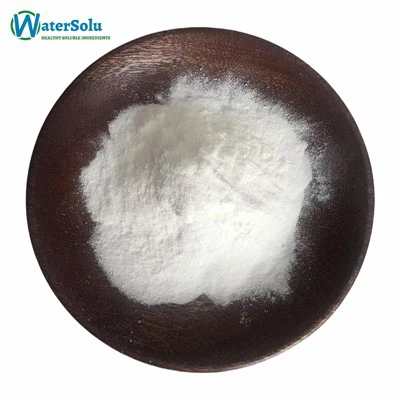
Watersolu's Normal Rice Protein 80% exemplifies this hybrid philosophy. The product integrates:
Ultra-fine 1000 mesh particle size: Maximizing surface area for rapid water penetration
Enzymatic extraction: Preserving protein integrity while eliminating the bitterness and structural damage associated with alkaline methods
Bulk density of 0.30–0.45 g/cm³: Ensuring a fluffy, free-flowing powder that resists clumping
This dual approach delivers a product that dissolves quickly in water with a mild initial bitterness that fades within seconds, leaving a clean, mellow aftertaste reminiscent of milk tea-a sensory profile unmatched by standard rice proteins.
The Science Behind Synergy
The fundamental mechanism underlying this synergistic success is straightforward: enzymatic treatment partially unfolds the protein and exposes hydrophilic residues, while ultra-fine grinding (1000 mesh) maximizes the surface area available for water interaction. This combined strategy achieves what neither method alone can: rapid hydration without the bitter off-notes associated with extensive hydrolysis. Recent research on walnut protein confirms that ultrasound-assisted enzymatic hydrolysis combined with glycosylation increased solubility by over 91%, validating the synergistic principle across protein sources.

Conclusion: The Ultimate Solution is Synergy
The question "Enzymatic hydrolysis vs. physical modification-who wins?" misses the fundamental reality of protein science. The ultimate solution for rice protein solubility is not choosing between approaches but strategically combining the strengths of both. Physical modification, particularly ultra-fine grinding to 1000 mesh, provides the immediate dissolution kinetics essential for beverage applications. Enzymatic extraction ensures the sensory purity and nutritional integrity that clean-label consumers demand. Together, they represent the new gold standard for plant-based protein ingredients.
For B2B buyers evaluating rice protein suppliers, the key question should not be "which method do you use?" but "how do you integrate multiple technologies to deliver optimal functionality for my specific application?" This shift from single-technology thinking to synergistic engineering defines the next generation of protein modification.
Contact Our Technical Team
Whether you are evaluating samples for R&D, comparing technical specifications, or planning long-term production, Watersolu provides customized solutions backed by scientific expertise and supply chain reliability.
📞 contact us
💬 WhatsApp: +86 17396654828
📧 Email: info@watersolu.com
Let's find the right rice protein solution for your product-reach out today for samples, technical data, or regulatory documentation.
===============
References
1.Li, Z., Chen, J., McClements, D.J., et al. (2025). Enhancement of the rice protein solubility using industry-scale microfluidization and pH cycling: A mechanistic study. Food Hydrocolloids, 110844.
2.Zheng, L., San, Y., Xing, Y., & Regenstein, J.M. (2024). Rice proteins: A review of their extraction, modification techniques and applications. International Journal of Biological Macromolecules.
3.Yao, K., et al. (2026). Unlocking the potential of rice bran protein: modification strategies and functional enhancements. Journal of Future Foods.
4.Zhao, S., Wu, Q., Jiang, Y., et al. (2025). Modulation of walnut protein solubility: effects of multiple modification treatments. Food Research International.
5.Mi, J., Zeng, X., Li, Y., et al. (2026). Recent advances in the modifications and food applications of rice bran proteins: A review. Journal of Cereal Science.
6.Modulating physicochemical properties of rice protein via alkaline solution combined with moderate heat treatment. (2025). Foods, 14(10), 1739.