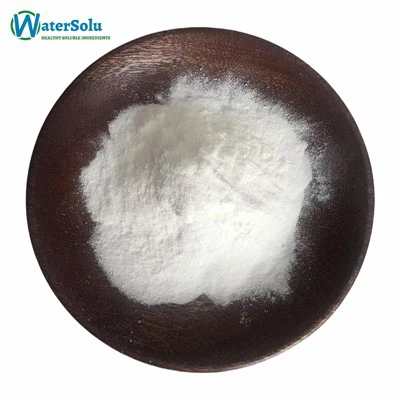


The global sports nutrition market is evolving rapidly. Consumers are no longer looking for overly sweet sports drinks with artificial ingredients. Instead, demand is growing for clean-label hydration products, electrolyte powder sticks, isotonic beverages, and functional RTD drinks that support performance, recovery, and daily wellness.
For beverage brands and OEM manufacturers, developing a sports electrolyte premix powder that is hydrating, has a good taste, dissolves quickly, is highly stable, and does not affect transparency and taste is crucial.
Why Solubility & Stability Matter for Osmotic Electrolyte Premixes?
Electrolyte hydration powders rely on dissolved minerals (sodium, potassium, magnesium, calcium) to replenish fluids lost during exercise, heat exposure, or daily activity. For osmotic sports electrolyte premix powders, the goal is to match or optimize blood osmolality (280–300 mOsm/L) for fast intestinal absorption-critical for athletes, outdoor workers, and anyone needing rapid rehydration.
Poor solubility leads to:
★ Gritty, unpleasant texture and undissolved residue
★ Inconsistent dosing (some servings have too few minerals, others too many)
★ Reduced bioavailability-minerals can't be absorbed if they don't dissolve
Poor stability causes:
★ Caking and clumping during storage (especially in humid conditions)
★ Crystal formation or precipitation after mixing
★ Degradation of active ingredients over time, shortening shelf life
For brands, these issues mean negative customer reviews, wasted product, and lost trust. For manufacturers , optimizing solubility and stability is non-negotiable.
What are the key factors affecting the solubility of sports electrolyte premix powder?
Combined with professional formulation technology and mature production process, the core factors affecting electrolyte powder solubility are summarized in the table below, covering raw material selection, particle processing, auxiliary formula, and technical parameters.
Key Factors Affecting the Solubility Performance of Sports Electrolyte Premix Powder and Optimization Schemes Table
|
Influencing Factor |
|
Core Technical Principle |
|
Unqualified Performance (Common Market Problems) |
|
WaterSolu Optimized Solution & Advantage |
|
Mineral Salt Selection & Formula Matching |
Different mineral salts have inherent water solubility differences. High-purity, high-bioavailability salt forms ensure full dissolution, while incompatible salt ratios easily cause precipitation and turbidity. |
Residual gritty residue, cloudy liquid, incomplete dissolution, poor taste; low-purity salts such as potassium phosphate and magnesium oxide lead to poor solubility. |
Adopts precision blended high-soluble salts (sodium chloride, potassium chloride, magnesium citrate, trace calcium citrate), completely excludes poorly soluble raw materials, and achieves over 95% solubility at room temperature for clean and residue-free dissolution. |
|||
|
Particle Size Engineering & Processing Technology |
Uniform and fine powder particles have larger water contact area. Professional micronization and agglomeration improve hydrophilicity and instant dissolution ability, avoiding floating and agglomeration. |
Coarse and irregular particles dissolve slowly; powder floats on the water surface, requires violent shaking, and is prone to caking in humid environments. |
Precision micronization (50–150μm D50) + fluidized bed agglomeration + surface hydrophilization treatment. Dissolves completely in 20–30 seconds without stirring, with excellent moisture resistance and non-caking performance. |
|||
|
Clean-Label Functional Excipients System |
Scientific compound excipients improve powder fluidity, dispersion and water affinity, adjust pH value, and prevent mineral crystallization and sedimentation without affecting osmotic pressure balance. |
Poor powder fluidity, easy moisture absorption and caking; liquid delamination and precipitation after dissolution; short shelf life. |
Uses clean and minimal excipients including maltodextrin, citric acid and trace silicon dioxide. Optimizes pH value (3.5–5.5), enhances dispersion, realizes 24-month stable shelf life, and meets clean-label, vegan and non-GMO standards. |
|||
|
pH Value & Osmotic Pressure Calibration |
Unreasonable pH value and osmotic pressure imbalance will destroy the stability of dissolved minerals, induce crystal precipitation, and reduce overall solubility and liquid clarity. |
Clear liquid turns cloudy after placement, microscopic precipitation, inconsistent product batch stability, reduced hydration efficiency. |
Precisely calibrates isotonic osmotic pressure (275–300 mOsm/L) and stable pH range, effectively inhibits mineral precipitation, maintains long-term liquid clarity, and ensures consistent dissolution performance of each batch of products. |
Packaging & Storage Solutions to Preserve Stability
Even the best-formulated electrolyte powder will degrade if packaged or stored improperly. Moisture and temperature fluctuations are the biggest enemies of powder stability-causing caking, clumping, and reduced solubility over time.
Best Practices for Osmotic Electrolyte Premixes
Airtight, Moisture-Barrier Packaging: Use foil-laminated sachets, HDPE jars with airtight seals, or moisture-proof bulk bags to block humidity
Desiccant Packs: Include silica gel or molecular sieve desiccants in packaging to absorb residual moisture
Cool, Dry Storage: Recommend storage at 15–25°C (59–77°F) with <60% RH; avoid direct sunlight or temperature swings
Single-Serve Sachets: Minimize air exposure for end-users, preventing clumping after opening
Packaging Expertise
We offer custom packaging solutions for our sports electrolyte premix powder osmotic, including:
♦ Single-serve foil sachets (moisture-proof, portable, ideal for athletes)
♦ Bulk 25kg moisture-barrier bags (for manufacturers and brands)
♦ Private-label HDPE jars with airtight seals (retail-ready, with desiccant included)
Our packaging is designed to preserve solubility and stability for 24 months, ensuring your product stays fresh and effective from production to consumption.
Post-Mix Stability: Preventing Precipitation & Sedimentation
Solubility isn't just about mixing-it's about staying dissolved after mixing. Many electrolyte powders form sediment or cloudy mixtures 10–15 minutes after preparation, which ruins the user experience.
Strategies for Post-Mix Stability
Use Chelating Agents: Citric acid or malic acid bind to minerals, preventing crystal formation and precipitation
Optimize Mineral Ratios: Avoid high calcium-magnesium ratios, which increase precipitation risk
Control Mixing Temperature: Recommend room-temperature water (20–40°C) for best dissolution and stability; add ice after mixing for cold drinks
Watersolu's Post-Mix Guarantee
Our osmotic electrolyte premix powder stays clear and sediment-free for up to 2 hours after mixing-even in cold water. The chelated mineral blend and balanced pH prevent crystal formation, so your customers can mix a drink and sip it slowly without worrying about gritty sediment at the bottom.
Frequently Asked Questions
Why are solubility and stability critical for osmotic electrolyte premix powder?
+
-
They ensure smooth dissolution, clear liquid, stable texture, long shelf life and consistent user experience for electrolyte hydration products.
What key factors affect electrolyte powder solubility?
+
-
Core factors include mineral salt formulation, particle processing technology, functional excipients, and pH & osmotic pressure calibration
How to keep electrolyte powder stable during storage?
+
-
Use moisture-proof airtight packaging with desiccants and store in cool, dry conditions away from sunlight and temperature changes.
How to prevent post-mix precipitation and turbidity?
+
-
Optimize mineral ratios and add chelating agents. Dissolve at proper temperature to maintain clear, sediment-free liquid.
References
1. Wang, Y., & Liu, S. (2022). Effects of Mineral Salt Formulation and Particle Size on the Solubility and Stability of Electrolyte Beverage Powders. Journal of Food Processing and Preservation, 46(8), e16892.
2. Zhang, H., et al. (2023). Osmotic Pressure Balance and pH Regulation Technology for Isotonic Sports Hydration Products. Food Science & Nutrition, 11(5), 2145-2153.
3. EFSA Panel on Food Additives. (2021). Safety Assessment of Citric Acid, Silicon Dioxide and Maltodextrin as Functional Excipients in Functional Beverages. EFSA Journal, 19(3), 6521.
4. Kim, J., & Park, T. (2022). Hygroscopic Stability and Anti-Caking Technology of Sports Nutrition Powder Formulations. Journal of Sports Food Science, 10(2), 88-95.