

Keep Ingredients Co., Ltd. is one of the leading manufacturers and suppliers of soy protein peptide in China. If you're going to wholesale bulk high quality soy protein peptide, welcome to get more information from our factory. Also, cheap products are available.
Product Introduction
Hydrolyzed Soy Protein Peptide with ≥90% Protein and ≥80% Peptide Content

Our Soy Protein Peptide Powder is a hydrolyzed plant protein ingredient made from non-GMO soy protein through enzymatic hydrolysis. It contains ≥90% protein and ≥80% peptide content on a dry basis, with ≥98% solubility at 25°C under the stated test conditions.
Compared with conventional soy protein, hydrolyzed soy protein peptide has a smaller peptide structure and is designed for applications where formulators need easier dispersion, high protein concentration, and improved sensory performance.
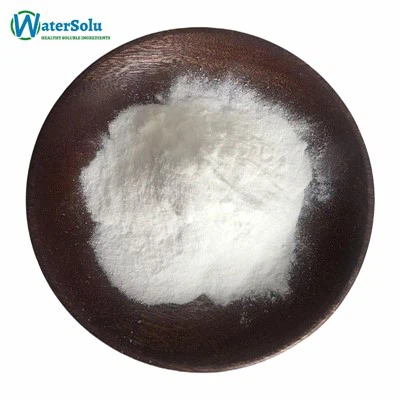
Our grade is debittered with no beany flavor at the recommended test concentrations, making it suitable for RTD protein beverages, sports nutrition, liquid nutrition, functional foods, protein powders, and savory formulations. The product is supplied as a white to light yellow fine powder and has a pH specification of 4.0–7.0. Technical documentation, COA, specification sheets, and samples are available for B2B formulation and product development.
Enzymatic Hydrolysis & Molecular Weight Optimization
Unlike intact soy protein isolates that can cause gut heaviness and sedimentation, Keep Ingredients utilizes a targeted dual-enzyme cleavage system to break soy protein down into highly bio-functional, low-molecular-weight short chains.
Sub-1,000 Da Dominance: Over 80% of the peptide profile consists of micro-peptides (< 1,000 Daltons), enabling direct intestinal enterocyte transport without secondary enzymatic degradation.
Advanced Bitterness Suppression: Hydrolysis often exposes hydrophobic amino acids, creating a bitter profile. Our proprietary enzyme-debittering protocol selectively neutralizes bitter-taste peptides, resulting in a clean, neutral sensory profile.
High Nitrogen Solubility Index (NSI): Achieves a consistent ≥98% solubility at 25°C, providing instant dispersion across a wide pH range (2.5–7.0).
Formulation Dynamics & Thermal Stability for Beverage Developers
Formulating high-protein RTD (Ready-To-Drink) beverages often leads to challenges such as heat-induced coagulation, viscosity spiking, and flavor degradation. Our soy protein peptide is engineered specifically to tackle these processing bottlenecks:
UHT & HTST Tolerance: Remains fully dissolved and visually clear/translucent even after thermal processing at 135°C–142°C for 4 seconds, without thermal aggregation.
pH Versatility: Unlike native soy proteins that precipitate at their isoelectric point (pH 4.5), this hydrolyzed peptide maintains complete fluid solubility across acidic, neutral, and alkaline bases (pH 2.5–8.0).
Viscosity Control: Adding up to 10% protein equivalent yields a low-viscosity, water-like fluid, preventing the thick, chalky mouthfeel common in standard plant-protein shakes.
Key Formulation Advantages of Our Soy Protein Peptide
For product developers, the value of a soy protein peptide depends not only on its protein content but also on how it performs during formulation and processing. Our Soy Protein Peptide Powder combines high protein content, defined peptide content, high water solubility, and an improved sensory profile for a range of nutritional applications.
High Peptide Content
With ≥80% peptide content on a dry basis, this ingredient is designed for applications that specifically require a hydrolyzed soy protein rather than a conventional intact soy protein.
The defined peptide specification gives formulators a clearer basis for evaluating the ingredient when developing hydrolyzed protein beverages, nutritional powders, and other peptide-focused products.
Debittered and Reduced Beany Flavor
The product is processed with debittering and flavor treatment to improve its sensory performance.
At a 5% aqueous concentration, the product has a neutral, debittered taste. At 10%, it has a mild flavor with no beany flavor under the stated test conditions.
This can be useful in protein beverages and nutrition formulas where strong soy notes may interfere with the desired finished-product flavor.
High Water Solubility
The product has a specification of ≥98% solubility at 25°C, with a typical result of 98.5%.
Good water solubility can simplify the preparation of protein drinks and powder-based beverage mixes. However, final solubility and stability should always be evaluated in the complete formulation, particularly when the product contains acids, minerals, electrolytes, or other active ingredients.
High Protein Concentration
With ≥90% protein on a dry basis, the ingredient provides a concentrated source of plant protein.
A high protein concentration can help formulators achieve the desired protein level without adding excessive amounts of powder to the finished product. This can be particularly relevant for protein drinks, meal replacement products, sports nutrition, and other high-protein formulations.
Non-GMO Soy Source
The product is made from non-GMO soy protein and can be considered for plant-based nutrition products where non-GMO sourcing is part of the purchasing specification.
For customers with specific market or labeling requirements, supporting documentation can be provided for evaluation.
Technical Specifications & Analysis
For ingredient buyers and formulators, a clear specification is essential when evaluating a hydrolyzed protein ingredient. The following parameters represent the current product specification and typical test results.
| Index Category | Specific Index | Specification | Typical Test Results | Test Method |
|---|---|---|---|---|
| Physicochemical Index | Appearance | White to Light Yellow Fine Powder | Complies | Sensory |
| Odor & Taste | Neutral, No Beany Flavor/Bitterness | Complies | Sensory | |
| Fineness | 100% through 0.250mm sieve | Complies | GB/T 22492-2008 | |
| Solubility (25℃) | ≥98% | 98.5% | Visual Test | |
| Bulk Density | 0.15-0.35 g/mL | 0.23 g/mL | Gravimetric Method | |
| pH (10% Aqueous Solution) | 4.0-7.0 | 5.97 | pH Meter Method | |
| Urease Activity | Negative | Negative | GB 5009.117 | |
| Safety Index | Lead (Pb) | ≤0.2 mg/kg | <0.1 mg/kg | GB 5009.12-2023 |
| Arsenic (As) | ≤0.3 mg/kg | <0.05 mg/kg | GB 5009.11-2024 | |
| Mercury (Hg) | ≤0.1 mg/kg | Not Detected | GB 5009.17-2021 | |
| Cadmium (Cd) | ≤0.1 mg/kg | <0.03 mg/kg | GB 5009.15-2014 | |
| Microbiological Index | Total Plate Count | ≤3×10⁴ CFU/g | 20 CFU/g | GB 4789.2-2022 |
| Coliforms | ≤0.92 CFU/g | <0.3 CFU/g | GB 4789.3-2016 | |
| Mould & Yeast | ≤50 CFU/g | <10 CFU/g | GB 4789.15-2016 | |
| Pathogens (Salmonella) | Negative (per 25g) | Not Detected | GB 4789.4-2024 |
The product also has defined heavy metal and microbiological specifications. Batch-specific Certificate of Analysis (COA) documentation can be provided for commercial orders and formulation evaluation.
For procurement teams, the specification sheet and batch COA can be used together to compare product requirements with the needs of the finished formulation.
Solubility, Taste and Processing Performance
For hydrolyzed protein ingredients, total protein content alone does not determine whether a product will perform well in a finished beverage or nutrition formula. Solubility, taste, pH, protein concentration, heating, mineral content, and other formula components can all affect the final product.
Our Soy Protein Peptide Powder is designed for applications where both high protein content and practical formulation performance are important.
Solubility
The product has a solubility specification of ≥98% at 25°C, with a typical result of 98.5%.
This high solubility supports applications such as protein beverages, liquid nutrition products, and powdered drink mixes.
For beverage development, however, we recommend evaluating the ingredient under the actual intended formulation conditions rather than relying only on the laboratory water-solubility result.
Important variables include:
Final protein concentration
Beverage pH
Mineral and electrolyte concentration
Sweeteners and acids
Flavor system
Heating process
Storage temperature
Packaging conditions
A formula containing high levels of minerals, acids, or other functional ingredients may behave differently from a simple water-solubility test.
Taste at Different Concentrations
Sensory performance is particularly important for high-protein beverages because protein flavor can become more noticeable as the usage level increases.
The current product specification provides the following reference:
5% aqueous solution: Neutral taste and debittered.
10% aqueous solution: Mild flavor with no beany flavor under the stated test conditions.
These results can be used as an initial reference during formulation development. The final sensory profile should still be evaluated using the complete beverage or food formula.
pH and Processing Considerations
The product specification is pH 4.0–7.0 when evaluated as a 10% aqueous solution.
For acidic beverages or formulas exposed to heat, the final product should be tested because protein behavior can change with pH, temperature, ionic strength, protein concentration, and processing time.
For example, an RTD beverage may require evaluation after homogenization, pasteurization or other thermal processing steps, followed by storage testing.
For customers developing a commercial product, we recommend testing:
Initial dispersion and solubility
pH adjustment
Heat-processing stability
Sedimentation or visible precipitation
Flavor after processing
Stability during storage
We can provide samples and technical documentation for customers who need to evaluate the ingredient under their own processing conditions.
Amino Acid Synergy & Nutritional Density
While grain-derived peptides (such as rice protein peptides) are naturally limited in essential amino acids like Lysine, our Soy Protein Peptide Powder delivers a complete, balanced amino acid spectrum ideal for muscle recovery and clinical nutrition:
Rich in Lysine (6.15 g/100g): Fills the critical amino acid gap found in cereal and grain proteins, making it an excellent base for plant-protein blending.
High Glutamic Acid Content (21.14 g/100g): Supports intestinal integrity, gut barrier function, and rapid post-exercise nitrogen replenishment.
BCAA Ratio: Contains a concentrated blend of Branched-Chain Amino Acids (Leucine 7.16g, Isoleucine 3.99g, Valine 4.34g) to stimulate muscle protein synthesis (MPS).
| Amino Acid | Content (g/100g) | Amino Acid | Content (g/100g) |
|---|---|---|---|
| Aspartic acid | 11.54 | Tyrosine | 2.48 |
| Threonine | 3.97 | Phenylalanine | 3.53 |
| Serine | 5.04 | Lysine | 6.15 |
| Glutamic acid | 21.14 | Histidine | 2.09 |
| Glycine | 4.00 | Arginine | 6.04 |
| Alanine | 4.51 | Proline | 3.81 |
| Valine | 4.34 | Cystine | 0.78 |
| Isoleucine | 3.99 | Methionine | 1.32 |
| Leucine | 7.16 | Tryptophan | 0.34 |
| Total Hydrolyzed Amino Acids | 92.23 | - | - |
How to Choose Soy Protein Peptide for Your Formula?
Choosing a soy protein peptide should start with the requirements of the finished product rather than the ingredient name alone. Different applications may require different priorities in terms of solubility, taste, protein concentration, and processing performance.
For RTD Beverages
Prioritize:
Water solubility
Sensory profile
Protein concentration
pH compatibility
Heat and storage stability
For Sports Nutrition
Prioritize:
Protein content
Peptide content
Amino acid profile
Serving size
Flavor compatibility
For Liquid & Specialized Nutrition
Prioritize:
Protein concentration
Sensory acceptance
Solubility
Processing conditions
Target market requirements
For Functional & Savory Foods
Prioritize:
Protein contribution
Flavor profile
Powder dispersibility
Processing requirements
Compatibility with other ingredients
If you have a target protein concentration, beverage pH, processing temperature, or finished-product dosage, we can provide a sample for application testing before bulk purchasing.

Why Choose Watersolu for Soy Protein Peptide Supply?
Choosing a protein ingredient supplier involves more than comparing protein content and price. For B2B buyers, consistent specifications, technical documentation, sample support, flexible logistics, and reliable supply capacity are equally important.
At Watersolu, we support customers from initial ingredient evaluation through formulation testing and bulk purchasing.
Clear Product Specifications and COA Support
We provide product specifications covering key parameters such as protein content, peptide content, solubility, pH, moisture, ash, fat, appearance, microbiological quality, and heavy metals.
A batch-specific Certificate of Analysis (COA) can be provided for commercial orders, helping purchasing and quality teams verify the material against the agreed specification.
Samples for Formulation Testing
Samples are available for customers who want to evaluate the ingredient before placing a bulk order.
Sample size: 100–500 g
Typical testing may include:
Solubility
Taste
Protein concentration
pH compatibility
Processing performance
Finished-product stability
This allows product developers to confirm application suitability before moving to commercial production.
Flexible MOQ and Packaging
The current MOQ is 1 kg, allowing customers to start with small-scale formulation testing before moving to larger orders.
Standard and customized packaging options can be discussed according to order volume and shipping requirements.
Reliable Supply Capacity
Watersolu supports both sample development and commercial-scale purchasing.
Our current annual production capacity includes:
Soy Peptide: 1,000+ tons/year
Soy Protein Series: 3,500+ tons/year
This capacity supports both regular purchasing and larger-volume projects while helping customers plan their ingredient supply more efficiently.
Global Shipping and Delivery Support
We support international shipments through commonly used trade terms, including:
DAP, DDP, FOB, and CIF
Typical delivery time:
Small orders: 3–7 days
Bulk orders: 7–15 days
Actual lead time may vary depending on order quantity, packaging requirements, destination, and shipping method.
Support for International B2B Buyers
Watersolu works with overseas customers sourcing plant proteins, peptides, functional ingredients, and botanical raw materials.
For international orders, we can support customers with product documentation, sample arrangements, packaging coordination, shipping communication, and bulk purchasing.
If you are developing a soy protein beverage, sports nutrition product, or other protein-based formulation, our team can provide the relevant specifications and samples for evaluation.

FAQ
Q: How does your enzymatic hydrolysis process reduce soy allergenicity and antigenicity for sensitive formulations?
A: While soy remains a mandatory allergen source for labeling, our directed dual-enzyme hydrolysis selectively breaks down key native globulins (specifically β-conglycinin and glycinin). This targeted cleavage significantly alters the linear epitopes, reducing its antigenic reactivity compared to standard soy protein isolates and improving digestive tolerance in sensitive functional formulations.
Q: Can this soy peptide powder be incorporated into high-calcium or mineral-fortified liquid nutrition products without precipitation?
A: Yes. Intact proteins frequently aggregate and precipitate in the presence of divalent cations (such as Ca²⁺ and Mg²⁺). Because over 80% of our soy peptide chains are below 1,000 Daltons, the reduced molecular weight minimizes ion-binding site availability, maintaining clear dispersion and high physical stability even in fortified plant milks or electrolyte beverages.
Q: What is the recommended dosage for using soy peptides to prevent the "bar-hardening" effect in high-protein bars?
A: Over time, standard soy protein isolates bind free moisture, leading to a tough, chalky texture in stored protein bars. Replacing 15%–30% of the total protein isolate with our low-molecular-weight soy peptide acts as a natural texture conditioner. It retains moisture mobility, extends shelf-life softness, and keeps the sensory profile clean.
Q: How do your flavor-debittering processing protocols interact with masking agents in RTD beverage systems?
A: Hydrolysis typically exposes hydrophobic amino acid residues that create a lingering bitter off-taste. Our proprietary enzymatic debittering protocol neutralizes these specific bitter peptide sequences during production rather than relying on heavy flavor masking. As a result, formulators can significantly reduce the usage of expensive flavor-masking agents and artificial sweeteners in clean-label RTD beverages.
Need a Soy Protein Peptide Sample or COA?
Looking for a high-protein soy peptide for RTD beverages, sports nutrition, protein powders, or functional foods?
Watersolu can provide Soy Protein Peptide Powder with ≥90% protein, ≥80% peptide content, and ≥98% solubility at 25°C, together with product specifications, COA, and samples for formulation testing.
Contact us to request a sample, COA, or bulk quotation.
📩 Email: info@watersolu.com
📱 WhatsApp: +86 17396654828
Please note that our products and services are intended for commercial and industrial use only.
Hot Tags: soy protein peptide, China soy protein peptide manufacturers, suppliers, factory